
Shop by Brand
-
 Carbon Collective33
-
 3D Car Care24
-
 Active7
-
 Angelwax26
-
 Autoglym14
-
 Bilt Hamber32
-
 Blo3
Blo3
-
 CA Detailing120
-
 CarPro51
-
 Cartec8
-
 Chemical Guys37
-
 Clean by Pan9
-
 Das-610
-
 DIY Detail26
-
 DTL Lab10
-
 Duel Autocare28
-
 EZ Detail Brushes3
-
 Flex42
-
 Garage Therapy24
-
 Grit Guard2
-
 Gtechniq34
-
 Gyeon84
-
 IK Sprayers12
-
 Infinity Wax27
-
 Koch Chemie68
-
 Kovax6
-
 Kwazar14
-
 Lake Country16
-
 Liquid Elements14
-
 Martin Cox8
-
 MaxShine5
-
 Menzerna11
-
 Microfiber Madness19
-
 MJJC9
MJJC9
-
 Mothers7
-
 MTM Hydro3
-
 NexDiag3
-
 P&S Detailing25
-
 Performance PPL18
-
 Rupes28
-
 ShineMate26
-
 Soft9913
-
 SONAX44
-
 Sponge Guru12
-
 Stjarnagloss21
-
 The Rag Company13
-
 Tolco5
-
 ValetPRO19
-
 YumCars35
-
 Slim's Detailing2
-
 ADBL21
-
 Vertool8
-
 Armour Detail Supply12
-
 ChemicalWorkz5
-
 Colourlock3
- L Labocosmetica
-
 Aromatic 896
-
 Scholl Concepts13
No brands match that search.

How to start a detailing business in the UK: 8 steps
Starting a car detailing business in the UK comes down to eight things: getting hands-on experience, buying the right kit, writing a simple business plan, sorting the legal side, choosing mobile or fixed, landing your first customers, looking after them, and scaling slowly. You can go mobile for around £450 if you're sensible with equipment, which is why most UK detailers start from a van rather than a unit. You don't need a specific licence to detail cars, but you'll want public liability insurance and you'll need to register with HMRC as a sole trader or limited company. The biggest mistake new detailers make is buying a machine polisher before they've nailed a two-bucket wash. Get the fundamentals right on your own car first, then take paying work. Here are the eight steps in full, with the exact kit and chemicals we'd start with.
1. Gain Hands-On Experience and Training
Before diving in, spend time mastering the craft. Whether you want to learn polishing paint, restore interiors, or apply ceramic coatings, hands-on experience is invaluable.
Before diving in, start with the basics. Perfecting a valet service (inside and outside detail) lays a strong foundation for more advanced techniques.
Here’s how to get started:
- Watch YouTube Tutorials: Industry experts and detailing enthusiasts share invaluable insights on techniques and product usage (Epic Automotive Detailing is a good start. Subscribe to this channel if you’re not already).
- Practice on Your Car, Friends & Family: Build confidence and refine your skills by working on familiar vehicles.
- Shadow Local Detailers: Hands-on experience is crucial. Reach out to detailers in your area to observe and learn their processes.
- Take Training from Experienced Detailers: Seek out the best in the industry, whether locally or across the country.
- Hold Off on IDA Membership: While the International Detailing Association (IDA) is a great resource, it’s not essential when starting out. Consider it later as you advance in your career and establish more credibility.
Having a structured training plan is key to upskilling. Begin with the basics, such as valeting and interior/exterior detailing, then progress to advanced techniques like ceramic coating, polishing, and scratch removal.
Online platforms like Detailing World are also excellent resources for learning techniques and staying updated on the latest products.
I also find r/AutoDetailing and r/DetalingUK very insightful. The communities there are very active and genuinely offer helpful tips. We’re also quite active in those communities and others.
If you're looking for a structured way to upskill, check out The Ultimate Guide to Interior Car Detailing for step-by-step instructions on cleaning and maintaining vehicle interiors.
2. Acquire the Right Equipment and Supplies
To start detailing, it’s essential to gather a variety of tools and products that will allow you to tackle both exterior and interior cleaning efficiently.
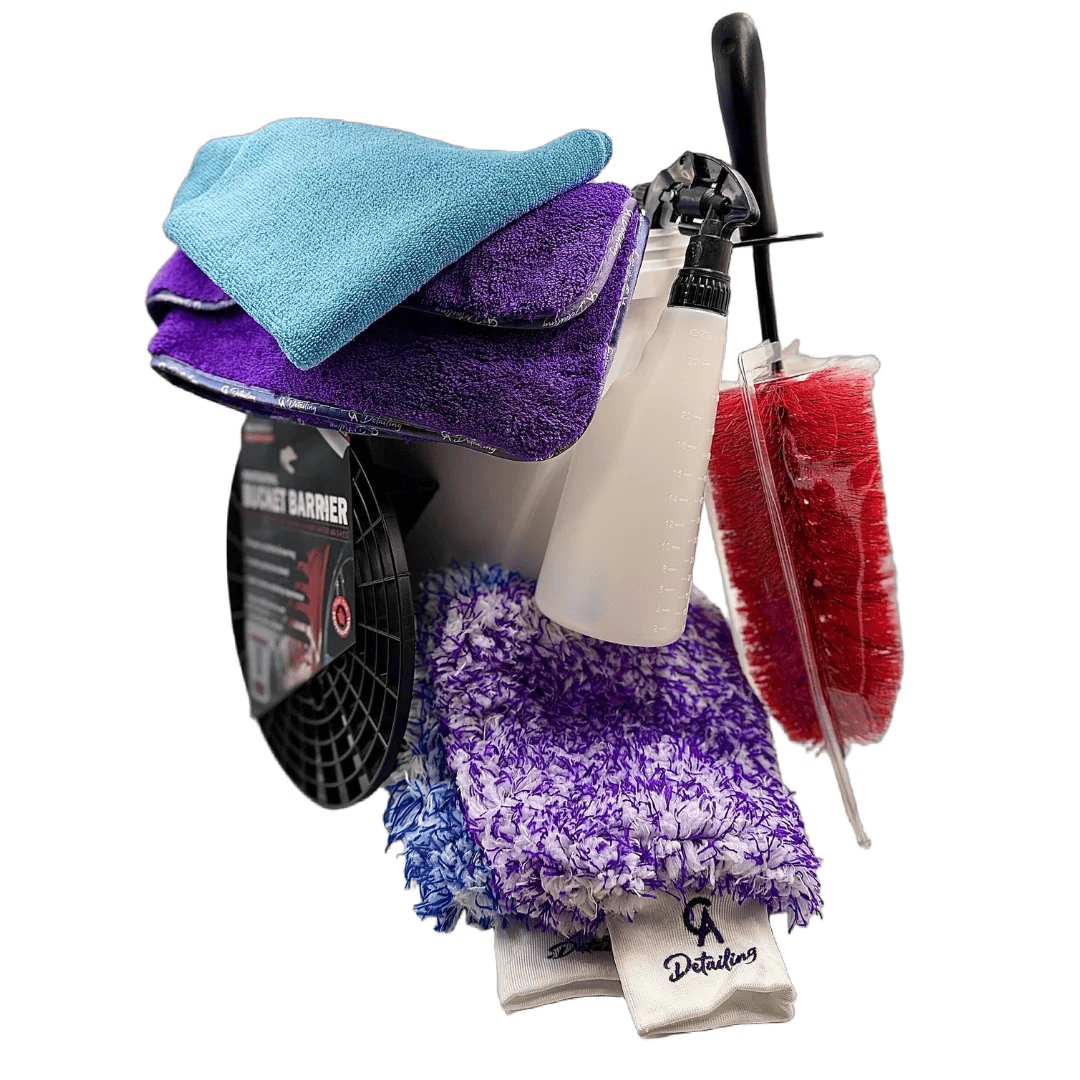
It’s important to focus on the essential tools and chemicals needed for basic exterior and interior cleaning. Once you’re comfortable with the basics, you can invest in additional tools and techniques to expand your services.
Essential Equipment for Detailing
Exterior Detailing
Achieving flawless exterior finishes begins with the right tools and techniques. Here’s a comprehensive list of must-haves:
- Pressure Washers: Start with the reliable Karcher K2 for affordability and performance, or invest in the high-end Kranzle K7 for professional results. You can find refurbished options at the Karcher Outlet.
- Buckets with Grit Guards: Prevent swirl marks by using a two-bucket method, paired with grit guards for effective dirt separation.
- Snow Foam Lances: The MJJC Foam Cannon ensures thick foam application, ideal for loosening dirt before contact washing, or you can opt for the CA Snow Storm Detailing model.
- Wheel Cleaning Tools: Combine the EZ Detail Range Brushes for intricate areas with the Meguiar’s Soft Microfiber Brush for a gentle touch. Add Stone Banks Hard Bristle Brushes for tougher grime removal on wheel barrels.
- Wash Mitts: Opt for CarPro Gloves or the premium YumCars Mitt for a swirl-free washing experience.
Interior Detailing
A spotless interior showcases true professionalism. Here’s what you’ll need:
- Vacuum Cleaners: The Titan Wet & Dry Vacuum is perfect for beginners, while the Kranzle Ventos provides superior suction and durability.
- Detail Brushes: Affordable options like Amazon’s detailing brush sets are great for starters, but for precision, upgrade to CarPro Detail Brushes.
- Pet Hair Removal Tools: For pet owners, pumice stones are a budget-friendly choice, while the Duel Pet Hair Remover offers an efficient alternative.
- Steam Cleaners: The Karcher SC3 is ideal for deep cleaning upholstery, carpets, and air vents.
General Essentials
These tools are non-negotiable for delivering high-quality results:
- Pump Sprayers: The IK Foam Pro 2 sets industry standards. If budget allows, start with the IK Foam Pro 2.
- Air Blowers: The BLO Dryer is indispensable for water removal in tight crevices, minimising water spots.
- Drying Towels: Invest in CAD microfiber towels for quick and scratch-free drying.
Essential Chemicals
Exterior Cleaning
- Car Wash Soaps: Use Duel Bahama Blue for gentle yet effective cleaning. For enhanced performance, try Gyeon Bathe.
- Snow Foam: Choose Bilt Hamber Auto-foam for tough dirt or Bilt Hamber Touch-less for a pH-neutral option.
- Iron Fallout Removers: The industry-favourite Bilt Hamber Korrosol visibly reacts to brake dust and iron contaminants, ensuring thorough decontamination.
Interior Cleaning
- All-Purpose Cleaners (APC): Koch Chemie Greenstar is versatile and economical, while Bilt Hamber Surfex handles tougher stains.
- Glass Cleaner: For streak-free results, rely on Bilt Hamber Traceless.
- Trim and Plastic Protectants: Use CarPro Perl for a satin finish on plastics and trim, suitable for both interior and exterior use.
Advanced Equipment for Upscaling Services
Once you've mastered the essentials, these advanced tools will enable you to expand your services and deliver premium offerings:
- Machine Polishers: Start with the Liquid Elements T2000 or T4000 for entry-level polishing, or upgrade to the Rupes Bigfoot Mille LK900E for professional-grade paint correction.
- Steam Cleaners: A Karcher SC3 with various attachments allows for deep cleaning and sanitisation.
- Air Compressors: Choose a 50L oil-free compressor like SGS 50L for better efficiency compared to 24L models.
Advanced Chemicals for Premium Services
- Polishing Compounds: For light correction, use Koch Chemie Fine Cut; for deeper scratches, rely on Koch Chemie Heavy Cut.
- Ceramic Coatings: Beginners can start with CarPro CQuartz UK 3.0, while Reign by PPL offers advanced protection.
- Spray-On Sealants: Infinity Wax Synergy Boost provides a durable, glossy finish.
Recommended Products from CA Detailing
Looking for the perfect detailing kit to elevate your car care routine? At CA Detailing, we’ve got you covered with our premium bundle kits.
The Pro Detailing Bundle Kit is perfect for seasoned professionals, offering top-tier products to achieve a showroom finish. If you’re just starting out, the Detailing Starter Bundle has everything you need to begin your journey into car detailing.
Explore our full range of bundles to find the perfect match for your needs, whether you’re looking for affordable starter kits or professional-grade products designed for enthusiasts who demand the best.
As your business grows, you can add advanced tools like steam cleaners, ozone generators, and extraction machines for deep cleaning carpets and upholstery.
Our Must-Have Car Detailing Kits & Products for Every Detailer provides a full breakdown of the essential products needed to start detailing like a pro.
3. Create a Solid Business Plan
Every successful business starts with a plan. While you can skip doing something like this if you’re really into doing things the right way, it’s really helpful to have a clear vision by taking the time to document your business plan.

Photo by Kiersten Williams: https://www.pexels.com/photo/empty-tables-with-goals-for-the-year-16037850/
Your detailing business plan should include:
- Services Offered: Decide whether to focus on exterior detailing, interior cleaning, or offer both. Consider if advanced services, such as paint correction or ceramic coatings, will be part of your service offerings to differentiate yourself.
- Pricing: Research your local competitors to determine competitive rates. Start with affordable pricing to attract initial customers and gradually adjust as your reputation and expertise grow.
- Market Analysis: Conduct a thorough analysis of your local market. Identify your competitors and evaluate what makes your services unique, ensuring you have a clear value proposition that sets you apart.
- Customer Acquisition: Develop a strategy to attract and retain customers, such as offering introductory discounts, leveraging social media, or establishing partnerships with local businesses.
- Training Plan: Invest in a comprehensive training plan to ensure you and your team are skilled in the latest techniques and tools, guaranteeing high-quality service and customer satisfaction.
A clear plan helps you stay organized and gives potential investors or lenders confidence in your business.
For templates and guidance, check out resources like SCORE’s Business Plan Template.
4. Understand Legal Requirements
You will hopefully be working with very valuable cars and things can go wrong! Therefore insurance is essential to cover your backside. Starting a car detailing business in the UK requires several types of insurance coverage to protect your business and clients.
The essential insurance types include Public Liability Insurance for customer and public protection, Employers' Liability Insurance (legally required if you have staff), Professional Indemnity Insurance for specialized services like paintwork correction, and Business Vehicle Insurance if you're using vehicles for work purposes.
Having proper insurance coverage safeguards against potential accidents, damages, and legal claims that could otherwise be financially devastating.
Kingfisher Insurance and Simply Business are popular providers that offer tailored policies for car detailing businesses. Both allow you to customize coverage to suit your specific needs, ensuring your business and clients are well-protected.
While specific detailing licenses aren't typically required in the UK. All detailing businesses must comply with health and safety regulations and environmental guidelines for waste disposal, though specific requirements can vary by location. It's advisable to check with your local council for any area-specific requirements.
Ensuring your business complies with legal regulations in the UK is essential. In a nutshell, here’s what to keep in mind:
- Business Registration: Register as a sole trader or a limited company with HMRC. If you expect to earn over £1,000 annually, registration is mandatory.
- Insurance: Public liability insurance is crucial to protect against accidental damage to client vehicles. If you hire employees, you’ll also need employer’s liability insurance.
- Environmental Permits: Mobile detailers must comply with water disposal regulations. Contact your local council for guidance on wastewater management and ensure compliance with the Environmental Protection Act.
- Tax Compliance: Keep accurate financial records and file annual self-assessment tax returns. Consider hiring an accountant to simplify this process.
To sign up and register your business, you visit “GOV.UK Set up a private limited company”.
5. Choose Between Mobile and Fixed Locations
In my personal opinion, starting as a mobile business is a smart choice. It involves lower startup costs and allows you to build your customer base without the overheads associated with rent and other expenses of a fixed location.
However, a fixed location may provide greater visibility and stability in the long term, offering customers a consistent place to find your services and potentially attracting more foot traffic. The decision ultimately depends on your business model, target audience, and financial resources.
Decide if you want to operate from a fixed location or go mobile. Each has its pros and cons:
- Mobile Detailing: Lower startup costs and flexibility to reach customers at their homes or workplaces. However, you’ll need a reliable vehicle and portable equipment.
- Fixed Location: Offers more space for equipment and the ability to handle multiple cars simultaneously. It also provides a professional image for walk-in clients.
Your choice depends on your budget, target market, and personal preferences. Mobile detailing businesses are increasingly popular in the UK due to their convenience for customers and lower overhead costs.
6. How to Get New Customers
Your brand is your identity, so invest in creating a professional and memorable image. A great logo, a catchy business name, and a user-friendly website are essential to make a strong first impression.
Social media platforms like Instagram and Facebook are fantastic for showcasing your work. Post eye-catching before-and-after photos to highlight your skills and build trust with potential customers. Tools like Canva can help you design professional marketing materials, while Squarespace makes it easy to build a sleek and functional website.
Photo by Darlene Alderson: https://www.pexels.com/photo/close-up-shot-of-a-person-using-a-laptop-7970817/
To improve your local visibility, register your business on Google My Business and consider using Nextdoor to connect with people in your area. Word-of-mouth is incredibly powerful in the UK, so focus on delivering exceptional service that people will want to talk about. Offer referral discounts to encourage satisfied customers to recommend your business to their friends and family. Partnering with local businesses can also help, as busy professionals often have disposable income but little time for car care—exactly the type of clients who will value your service.
Don’t forget to make the most of platforms like TikTok for short, engaging videos that show off your expertise and personality. Combining a strong online presence with personal connections in your community will give your business the edge it needs to grow.
A strong online presence is crucial for attracting new customers. One of the best ways to get noticed is by offering high-end ceramic coatings. Learn Why Ceramic Coating Is Essential for Your Car and how offering this service can increase your revenue.
7. Focus on Customer Service
Happy customers are your best marketing tool. Always prioritise clear communication, punctuality, and attention to detail. Encourage satisfied clients to leave reviews online—positive testimonials can significantly boost your credibility.
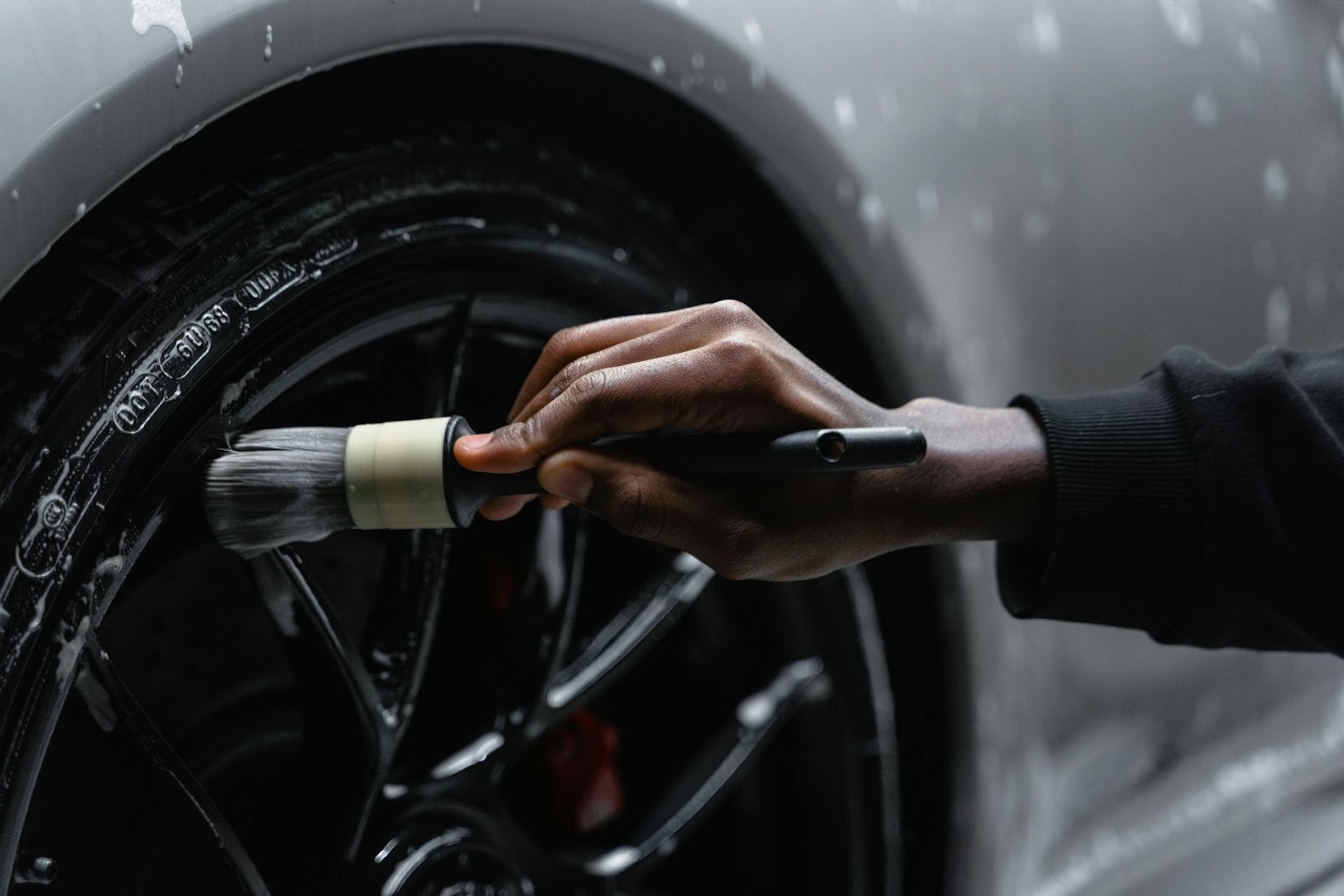
Photo by Tima Miroshnichenko: https://www.pexels.com/photo/a-person-cleaning-tire-of-a-car-6872175/
You can use a checklist to help you guide your process and your customers would also appreciate that little detail. You can download our checklist here. Make sure to print many copies.
Providing a loyalty programme or seasonal promotions can also help retain customers and attract new ones. For example, offer a free tyre dressing with every full valet service during winter months. This not only adds value but also incentivises repeat business.
8. Start Small and Scale Up
Don’t feel pressured to have it all from day one. Begin with essential tools and a few services. As your client base grows, reinvest profits into your business to expand your offerings and upgrade your equipment.
Scaling up might involve hiring additional staff, investing in advanced equipment, or even opening multiple locations. You could also explore partnerships with local car dealerships or fleet operators to secure long-term contracts.
For advice on scaling a small business, visit Forbes Small Business.
Once you've built a solid customer base, you can start scaling up with premium-grade products. If you're ready to upgrade your detailing services, consider Mastering Car Detailing with Bilt-Hamber Products for top-tier cleaning and protection solutions.
Final Words
Starting a detailing business is a journey of passion, preparation, and persistence. Draft your business plan, invest in essential tools, and keep learning as you go.
Remember, the road to success is paved with dedication and hard work. Begin your journey today and transform your love for cars into a thriving business!
Frequently asked questions
How much does it cost to start a car detailing business in the UK?
You can start a mobile detailing business for around £450 if you're buying smart. That covers a pressure washer, two buckets with grit guards, a snow foam lance, a set of wheel brushes, wash mitts, microfibre towels, and a starter set of chemicals. A fixed unit will cost significantly more once you factor in rent, rates, and the additional kit that comes with it. Going mobile first is the sensible move.
Do you need a licence to be a car detailer in the UK?
There's no specific licence required to detail cars in the UK. What you do need is public liability insurance, it's not legally mandatory but no serious customer will let you work on their car without it. If you take on staff, employers' liability insurance becomes a legal requirement. You'll also need to register with HMRC as a sole trader or limited company once you're earning over £1,000 a year.
How much do car detailers earn in the UK?
Earnings depend on where you're based, what services you offer, and how full your diary is. Mobile detailers typically charge from £100 to £160 or more for a full exterior and interior detail, depending on the car's condition and your experience. Paint correction and ceramic coating work commands a significant premium on top of that. A full-time mobile detailer running five to six jobs a week can build a reasonable income, but in the early months expect to spend as much time on marketing and customer admin as you do on cars.
Is a car detailing business profitable?
It can be, but margins depend heavily on your service mix. Basic wash-and-vac work has thin margins because the market is competitive and customers are price-sensitive. The money is in higher-value work like paint correction, ceramic coatings and interior deep cleans, where your time is better paid and fewer competitors can deliver the same quality. Most detailers who scale profitably start mobile to keep overheads low, then reinvest in equipment and reputation before expanding.
What equipment do you need to start car detailing?
The minimum kit for mobile work: a pressure washer (the Karcher K2 is a practical starting point), two buckets with grit guards, a snow foam lance, wheel brushes (the EZ Detail range covers most wheel types), a quality wash mitt, microfibre drying towels, and a basic chemical set covering snow foam, a pH-neutral shampoo, an iron fallout remover like Bilt Hamber Korrosol, and an all-purpose cleaner. Hold off on a machine polisher until you've got the contact-wash process dialled in.
Should you start mobile or from a fixed unit?
Mobile for most people. The startup costs are dramatically lower, you're not committed to rent before you've built a customer base, and customers genuinely value the convenience of having their car done at home or work. A fixed unit makes sense once you've got consistent volume, want to take on bigger jobs simultaneously, or are moving into coatings work that needs a dust-free environment. Most successful UK detailing businesses started mobile and moved to a unit once the revenue justified it.
Related Articles


Is nonpaints.com Legit? Yes, But UK Buyers Should Read This First


September 15, 2026
Is nonpaints.com Legit? Yes, But UK Buyers Should Read This First
Best Multi-Purpose Cleaner for Car Detailing


September 10, 2026
Best Multi-Purpose Cleaner for Car Detailing

How to Wash Cars with PPF and Vinyl Wraps


September 7, 2026
How to Wash Cars with PPF and Vinyl Wraps


- Choosing a selection results in a full page refresh.
!