
Shop by Brand
-
 Carbon Collective33
-
 3D Car Care24
-
 Active7
-
 Angelwax26
-
 Autoglym14
-
 Bilt Hamber32
-
 Blo3
Blo3
-
 CA Detailing120
-
 CarPro51
-
 Cartec8
-
 Chemical Guys37
-
 Clean by Pan9
-
 Das-610
-
 DIY Detail26
-
 DTL Lab10
-
 Duel Autocare28
-
 EZ Detail Brushes3
-
 Flex42
-
 Garage Therapy24
-
 Grit Guard2
-
 Gtechniq34
-
 Gyeon84
-
 IK Sprayers12
-
 Infinity Wax27
-
 Koch Chemie68
-
 Kovax6
-
 Kwazar14
-
 Lake Country16
-
 Liquid Elements14
-
 Martin Cox8
-
 MaxShine5
-
 Menzerna11
-
 Microfiber Madness19
-
 MJJC9
MJJC9
-
 Mothers7
-
 MTM Hydro3
-
 NexDiag3
-
 P&S Detailing25
-
 Performance PPL18
-
 Rupes28
-
 ShineMate26
-
 Soft9913
-
 SONAX44
-
 Sponge Guru12
-
 Stjarnagloss21
-
 The Rag Company13
-
 Tolco5
-
 ValetPRO19
-
 YumCars35
-
 Slim's Detailing2
-
 ADBL21
-
 Vertool8
-
 Armour Detail Supply12
-
 ChemicalWorkz5
-
 Colourlock3
- L Labocosmetica
-
 Aromatic 896
-
 Scholl Concepts13
No brands match that search.
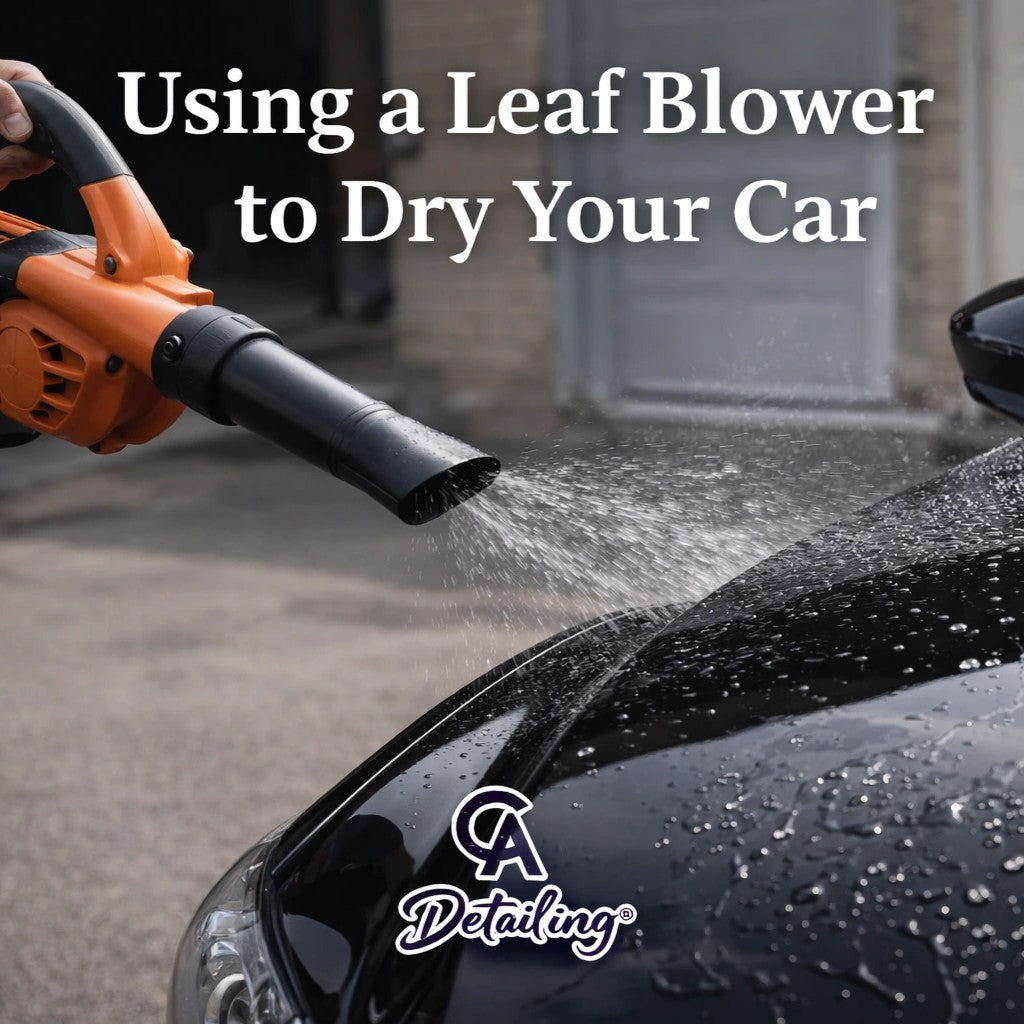
Using a Leaf Blower to Dry Your Car
Drying is one of the most common points where paint damage is introduced. Many swirl marks and light scratches are not caused during washing, but during drying.
Using a leaf blower to dry your car is often suggested as a way to reduce towel contact. In the right conditions, it can work well. In the wrong conditions, it can make things worse by blowing dirt back onto the paint.
This guide focuses specifically on using a leaf blower to dry your car, explaining when it makes sense, when it should be avoided, how to do it safely, and what alternatives exist if a leaf blower is not suitable.

What Using a Leaf Blower Actually Does
A leaf blower removes water by pushing it off the surface with airflow rather than absorbing it with a towel. The benefit is reduced physical contact with paint.
However, a leaf blower does not clean the surface. If dirt or grit is still present, airflow can move that contamination across the paint, increasing the risk of scratching.
This is why leaf blower drying only works when the car is already properly washed and rinsed.
When Using a Leaf Blower Makes Sense
Using a leaf blower can be helpful when:
-
The car has been thoroughly washed and fully rinsed
-
There is no visible dirt left on the paint
-
The surrounding area is clean and not dusty
-
The paint has wax, sealant, or ceramic protection that helps water bead
-
You want to remove water from mirrors, grilles, badges, and trim
-
You plan to finish with a light towel dry if needed
In these situations, a leaf blower can reduce drying time and limit how much the paint is touched.

When You Should Not Use a Leaf Blower
There are situations where a leaf blower is the wrong tool.
Avoid using one when:
-
The paint still has visible dirt or grit
-
The ground around the car is dusty, sandy, or gravelly
-
Strong wind is already blowing debris around
-
The paint is unprotected and water clings heavily
-
You are using a petrol or gas-powered blower
In these conditions, airflow can blow contamination back onto the surface and undo careful washing.
Important Safety and Equipment Considerations
Using a leaf blower around a wet car requires some basic precautions.
-
Electric only: Petrol or gas blowers can spit oil mist and exhaust residue
-
Electrical safety: Use outdoor-rated sockets and keep cords away from standing water
-
Air intake quality: Many leaf blowers pull unfiltered air from ground level
-
Noise: Prolonged use can be loud, ear protection may be sensible
-
Handling: Avoid dropping the blower or nozzle onto the car
A leaf blower will not damage paint or seals when used at a sensible distance, but forcing air into loose trim or seals should always be avoided.
How to Dry Your Car with a Leaf Blower Properly
Using a leaf blower correctly is about control, not power.
Step-by-Step Method
1. Final rinse thoroughly
Make sure all shampoo residue and loose dirt are removed. If the surface still looks dusty, rinse again before drying.
2. Start at the top
Begin at the roof and work downward. This prevents water from running back over areas you have already dried.
3. Keep your distance
Hold the blower far enough away to push water off the panel rather than blasting air directly at the surface.
4. Move methodically
Work panel by panel. Jumping around allows water to reappear and wastes time.
5. Focus on trapped water areas
Use airflow to clear water from:
-
Mirrors and housings
-
Badges and grilles
-
Door handles and fuel caps
-
Panel gaps and trim edges
6. Finish with a towel if needed
If small droplets remain, use a clean microfibre towel lightly. The goal is moisture removal, not wiping the paint
Risks Specific to Leaf Blowers
Leaf blowers are not designed for car care, which creates some limitations.
Common risks include:
-
Unfiltered air blowing dust or grit
-
Excessive airflow if used too close
-
Pulling debris from the ground into the airflow
-
Poor control on high-power settings
These risks are manageable, but only if the environment and technique are suitable.
Can a Leaf Blower Damage Paint, Trim, or Seals?
When used correctly, a leaf blower does not damage paint.
Problems occur when:
-
Air is forced directly into loose trim or seals
-
The nozzle is held too close to the surface
-
Dirt is still present on the paint
Used at a sensible distance on a clean car, airflow alone does not harm clear coat, trim, or badges.
Water Spots and Leaf Blower Drying
A leaf blower can reduce water spots, but it does not guarantee prevention.
Water spots form when mineral-rich water evaporates slowly on warm panels. To reduce the risk:
-
Dry the car promptly after rinsing
-
Avoid drying in direct sun
-
Dry in shaded or cooler conditions
-
Use a drying aid spray if needed
-
Be aware that water quality still matters
Air helps remove water faster, but minerals still remain if water is hard.
Alternatives to Using a Leaf Blower
If a leaf blower is not suitable, other options may work better.
1. Towel Drying
-
More controlled in dusty environments
-
Requires good technique and clean towels
-
Higher contact risk than air
2. Purpose-Built Car Dryers
-
Designed to address leaf blower limitations
-
Filtered air and controlled output
-
Mentioned for context, not required
3. Combination Method
For most people, the safest approach is:
- Use a leaf blower to remove bulk water and clear gaps
-
Finish with a light towel dry
This reduces contact without relying entirely on airflow.
| Method | Contact Risk | Speed | Best For |
|---|---|---|---|
| Towel drying only | Medium | Medium | Traditional approach |
| Air drying only | Low | Fast | Gaps, protected paint |
| Air + towel | Very low | Fast | Best all-round method |
| Waterless wash | Medium | Fast | Light dust only |
Combining air and towel drying offers the best balance for most users.
Some Purpose-Built Car Dryers Suggestions from Us
1. BLO AIR-S Hand Held Car Dryer
The BLO AIR-S hand held car dryer is compact and lightweight, making it ideal for quick drying tasks.
Best suited for:
- Smaller vehicles
- Spot drying mirrors and trims
- Users who want portability
Key points:
- Easy to handle
- Filtered air
- Lower power compared to larger units
2. BLO AIR RS Car Dryer
The BLO AIR RS car dryer offers more power while remaining manageable for regular use.
Best suited for:
- Full vehicle drying
- Regular car care routines
- Users wanting faster results
Key points:
- Strong airflow
- Controlled output
- Good balance of size and performance
3.BLO AIR GT Car Dryer
The BLO AIR GT car dryer is designed for maximum performance and speed.
Best suited for:
- Larger vehicles
- Enthusiasts and professionals
- Minimal towel contact workflows
Key points:
- Highest airflow
- Fastest drying
- Best for frequent use
Comparison Table: BLO AIR Car Dryers
Users often find that choosing the right machine depends on the size of their vehicle and how often they wash. Here is a direct comparison of the BLO AIR range to help you decide which dryer fits your detailing routine.
| Feature | BLO AIR-S | BLO AIR RS | BLO AIR GT |
|---|---|---|---|
| Image |  |
 |
 |
| Size | Compact | Medium | Large |
| Power Level | Low to moderate | High | Very high |
| Best For | Spot drying | Full car drying | Fast, full drying |
| Ease of Use | Very easy | Easy | Moderate |
| Towel Drying Needed | Yes | Minimal | Rare |
While the BLO AIR-S is perfect for motorbikes and intricate trim, the GT model is the ultimate solution for those looking to eliminate towel contact entirely on larger vehicles.
Leaf Blower Maintenance and Care
To keep airflow as clean as possible:
-
Keep intake vents clean
-
Avoid using the blower directly from ground level
-
Store in a clean, dry area
-
Do not use if the blower is visibly dirty inside
Clean equipment reduces the chance of blowing contamination onto paint.
Verdict
Using a leaf blower to dry your car can be a useful technique when the car is already clean, the environment is controlled, and the blower is used with care.
It is not a replacement for proper washing, rinsing, or common sense. Used incorrectly, it can increase the risk of scratches. Used correctly, it can reduce towel contact, speed up drying, and help clear water from hard-to-reach areas.
For most people, a leaf blower plus a light towel finish offers the best balance of speed and paint safety.
Frequently Asked Questions
Related Articles


Is nonpaints.com Legit? Yes, But UK Buyers Should Read This First


September 15, 2026
Is nonpaints.com Legit? Yes, But UK Buyers Should Read This First
Best Multi-Purpose Cleaner for Car Detailing


September 10, 2026
Best Multi-Purpose Cleaner for Car Detailing

How to Wash Cars with PPF and Vinyl Wraps


September 7, 2026
How to Wash Cars with PPF and Vinyl Wraps


- Choosing a selection results in a full page refresh.
!